



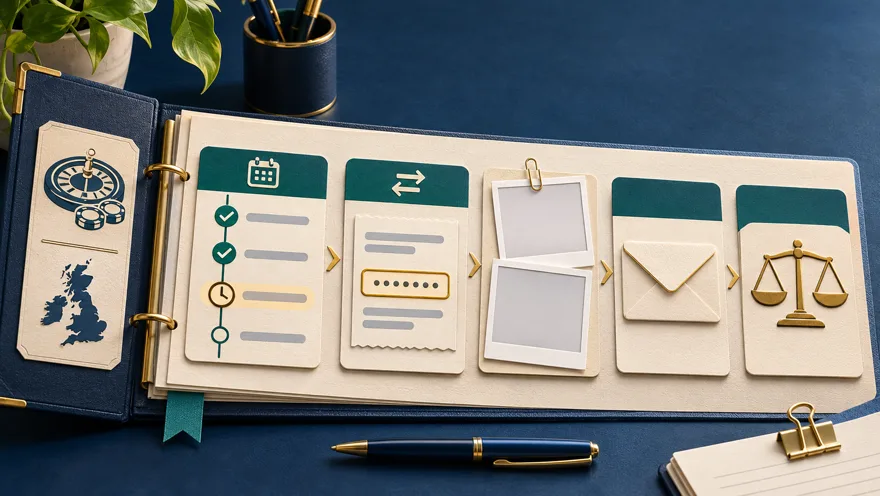
Working table
| Stage | Recipient | Include | Outcome to keep |
|---|---|---|---|
| 1. Formal complaint | Licensed gambling business | Account/transaction IDs, chronology, issue, remedy | Case number and acknowledgement |
| 2. Internal review | Senior complaint handler if offered | Response gaps and indexed evidence | Final response or deadlock |
| 3. ADR | Provider named by operator | Final response, full file, remedy sought | ADR acceptance and decision |
| Regulatory intelligence | Gambling Commission | Pattern or suspected licence breach | Report reference; not individual compensation |

Write the complaint an investigator needs
Lead with the account identifier that is safe to share, the disputed amount and transaction ID, and a one-sentence issue. Follow with dated events, the current location/status of funds, the term or process relied upon, previous replies and the exact remedy sought. Attach an index rather than pasting dozens of screenshots without labels.
Do not include passwords, one-time codes, full card numbers or irrelevant identity documents. Use the operator’s authenticated complaint route.
Start with the licensed business
Check the exact business and domain in the UK Gambling Commission public register. The brand visible to a customer may differ from the legal entity holding the licence. Find its complaints procedure and named ADR provider; save a dated copy.
Ordinary customer support may fix the issue, but do not let repeated chat sessions replace the formal process after the matter is clearly disputed. Ask support to confirm the complaint date and case number.
Understand the eight-week and deadlock routes
The Commission’s public guidance says the business has up to eight weeks to resolve a complaint. If it cannot, it should provide a deadlock letter so the complaint can go to ADR. A final response can also arrive earlier. ADR is free to the consumer for gambling disputes covered by the provider’s remit.
ADR is not a general regulator appeal and may reject matters outside scope. Submit the operator’s final response, requested evidence and a clear remedy.
What the Gambling Commission does—and does not do
The Commission licenses and regulates gambling businesses and can use reports as regulatory intelligence. It does not resolve individual complaints or order refunds as an ombudsman. Send the individual dispute through the business and ADR path; report broader licensing concerns separately without assuming that report pauses the complaint deadline.
A practical sequence
- Verify the licensed business and save its complaint procedure.
- Send a formal, dated complaint with a specific remedy.
- Keep the acknowledgement, case number and every response.
- At final response/deadlock or eight weeks, check the named ADR route.
- Keep regulatory reporting separate from individual redress.
Great Britain scope
This guide is for adults in England, Scotland and Wales dealing with businesses licensed by the UK Gambling Commission. It does not cover Northern Ireland. Payout Case is editorial and does not rank operators, publish offers, accept gambling accounts or receive referral payments.
Frequently asked questions
How long does a casino have to answer a complaint?
UK Gambling Commission guidance allows the business up to eight weeks to resolve it. An earlier final response or deadlock can open the ADR route sooner.
Can the Gambling Commission get my money back?
It does not resolve individual disputes or act as an ombudsman. Use the operator’s complaints process and its named ADR provider for eligible claims.
Does ADR cost the customer?
The Commission describes gambling ADR as free to consumers. Check the named provider’s current remit and submission rules.
Related guides
Evidence checklist · Withdrawal pending · Withdrawal rejected · Public register
Sources
- UK Gambling Commission: how to complain
- UK Gambling Commission: taking a complaint to ADR
- UK Gambling Commission public register
Sources reviewed 16 November 2026. Check the current regulator guidance and the business’s own terms and complaint procedure.